Work / Health & Fitness / iOS / Android (Mobile)
Case Study 01· Flagship

FIT QUEST

A goal-based fitness app that makes training personal, guided and easy to stick to.

★ FlagshipFIT QUEST
My role

Sole UX/UI Designer

Tools

Figma · AI-assisted workflow

Platform

iOS / Android (Mobile)

Year

2025–2026

Overview

The context

FIT QUEST is my flagship project: a mobile fitness app built around one idea — make fitness feel personal and achievable. It opens by asking the user's main goal, then curates a focused library of workouts to match. Progress and nutrition are tracked simply, a premium tier unlocks more, and accessibility is built in from the start. It was a self-initiated project to explore motivation, personalisation and a complete mobile experience.

The problem

What needed solving
  • Beginners feel overwhelmed. Most fitness apps lead with complexity — endless plans, metrics and jargon — and people quit.
  • Generic plans don't fit. One-size-fits-all routines ignore why someone is actually training.
  • Consistency is the real challenge. Without clear, personal guidance, motivation fades and the habit breaks.

The solution

My approach
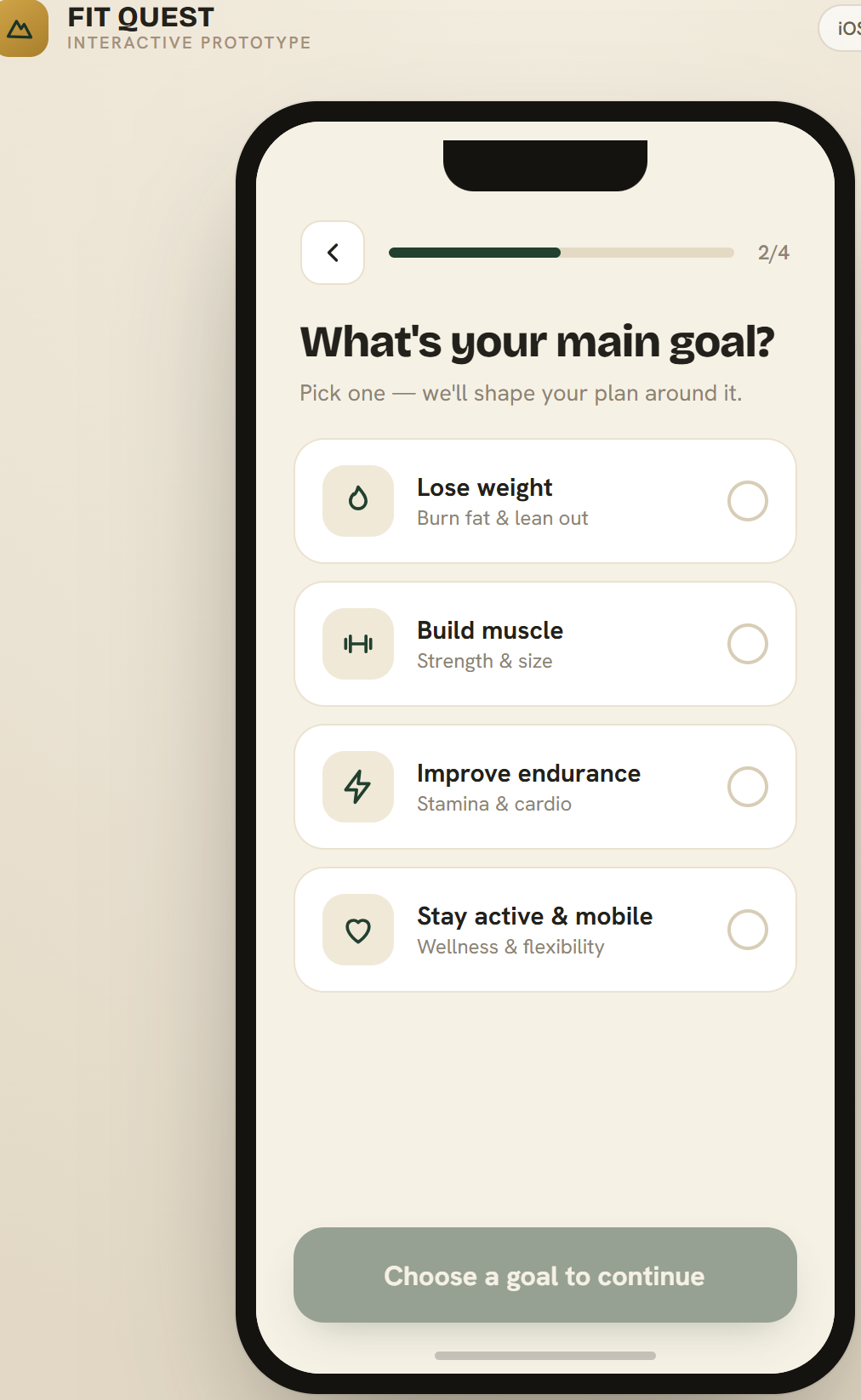
  • Start with the goal. Onboarding asks ‘What's your main goal?' and tailors the experience around the answer.
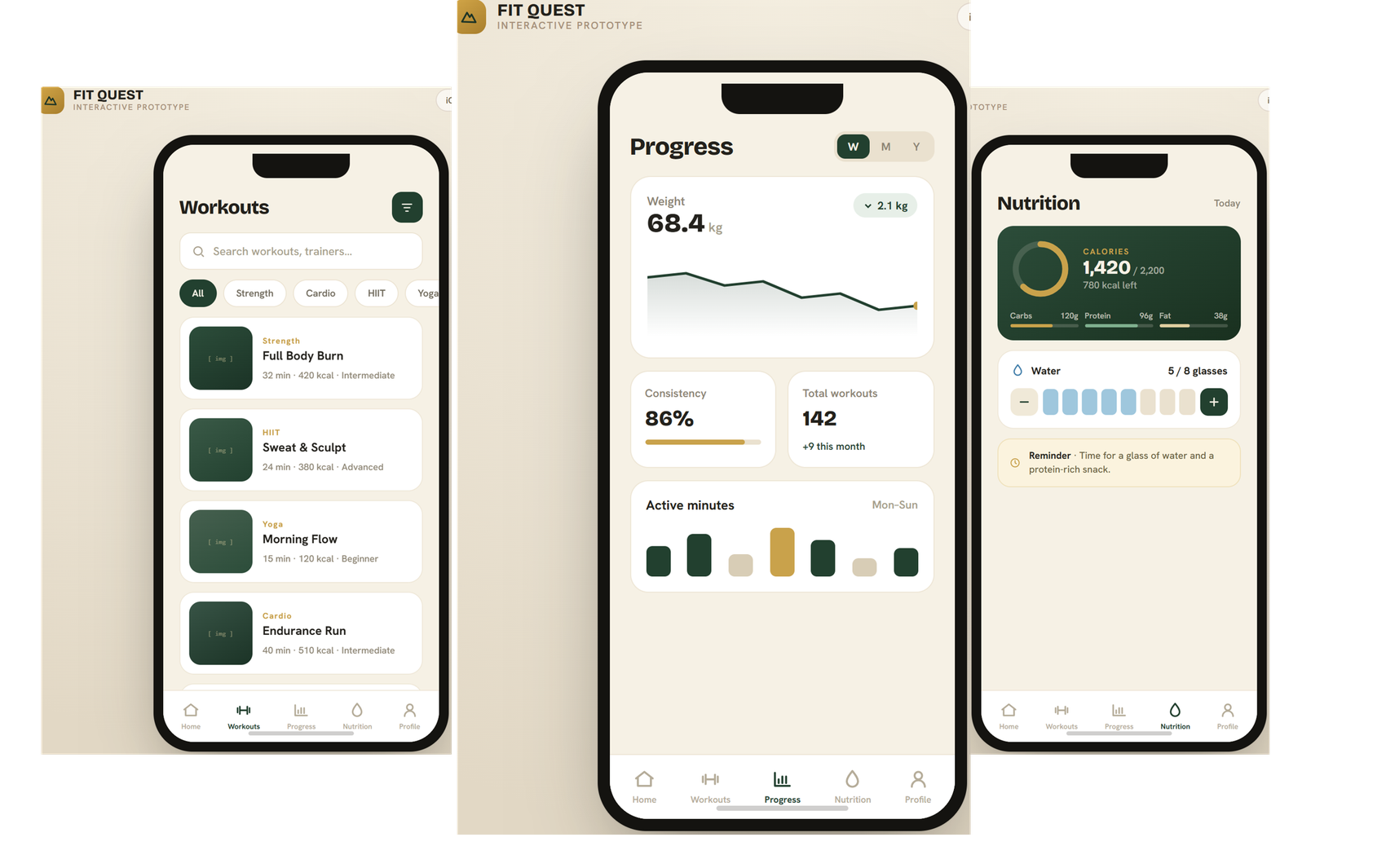
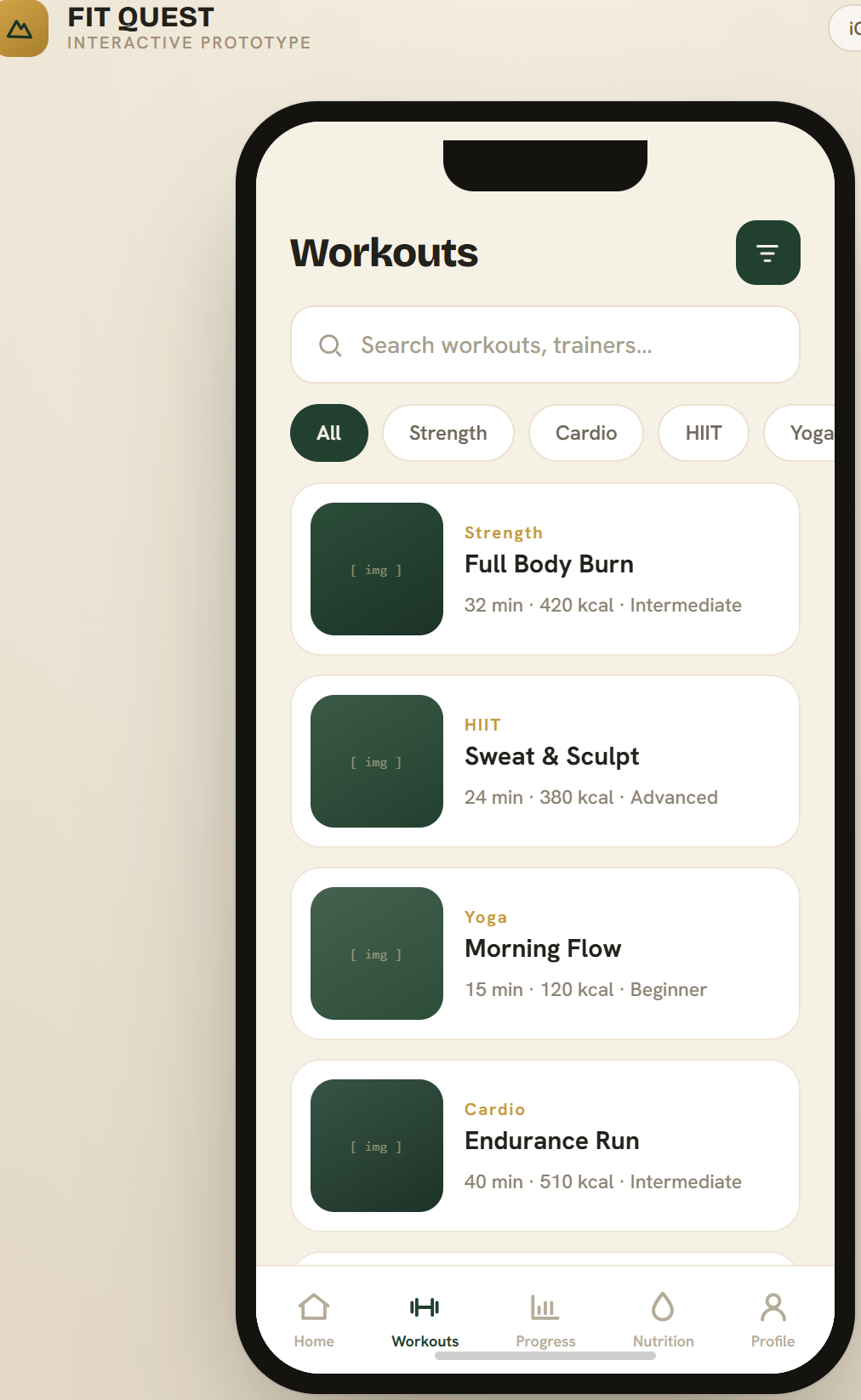
  • A focused workout library. Clean, filterable workouts (Strength, Cardio, HIIT, Yoga) remove guesswork.
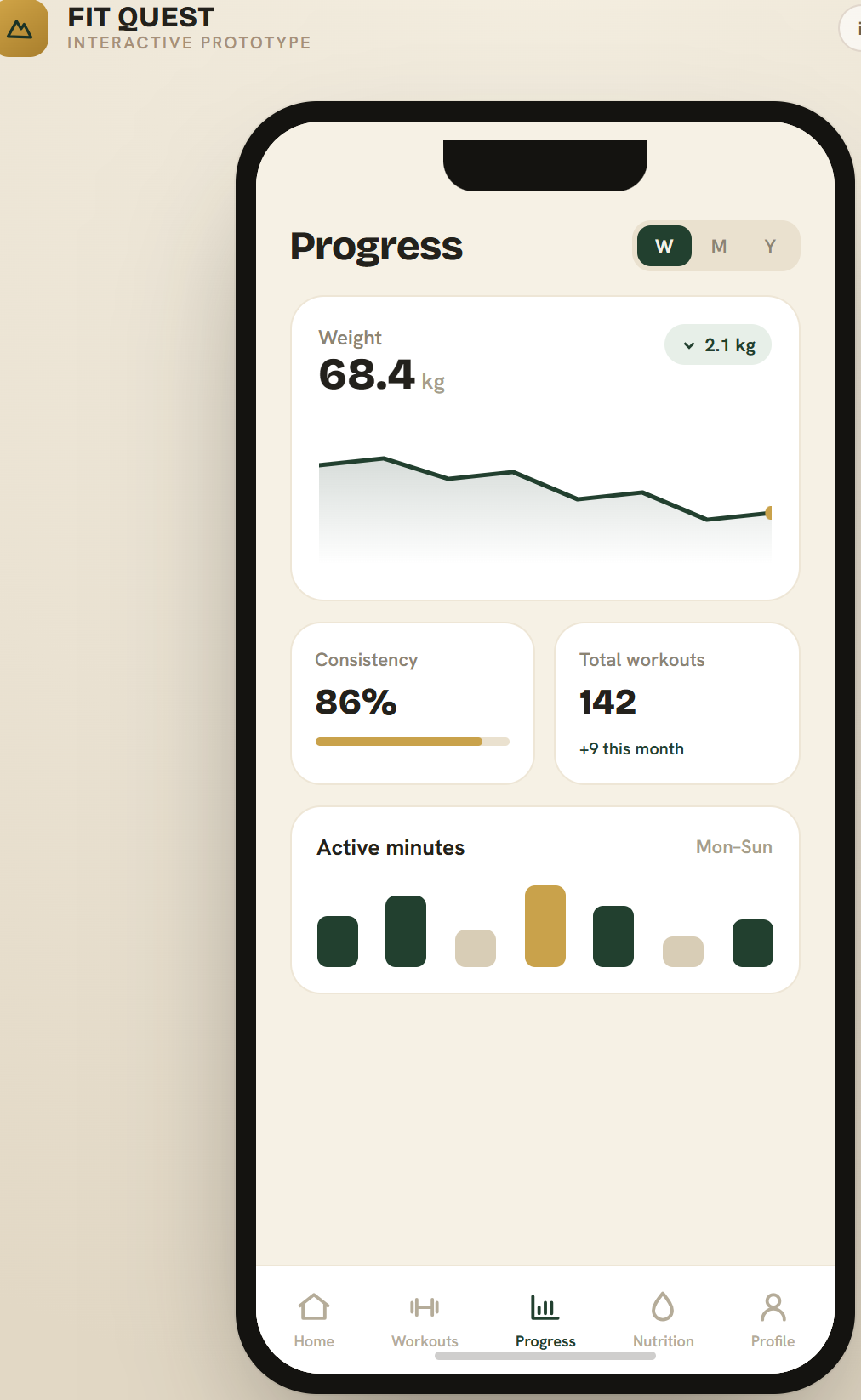
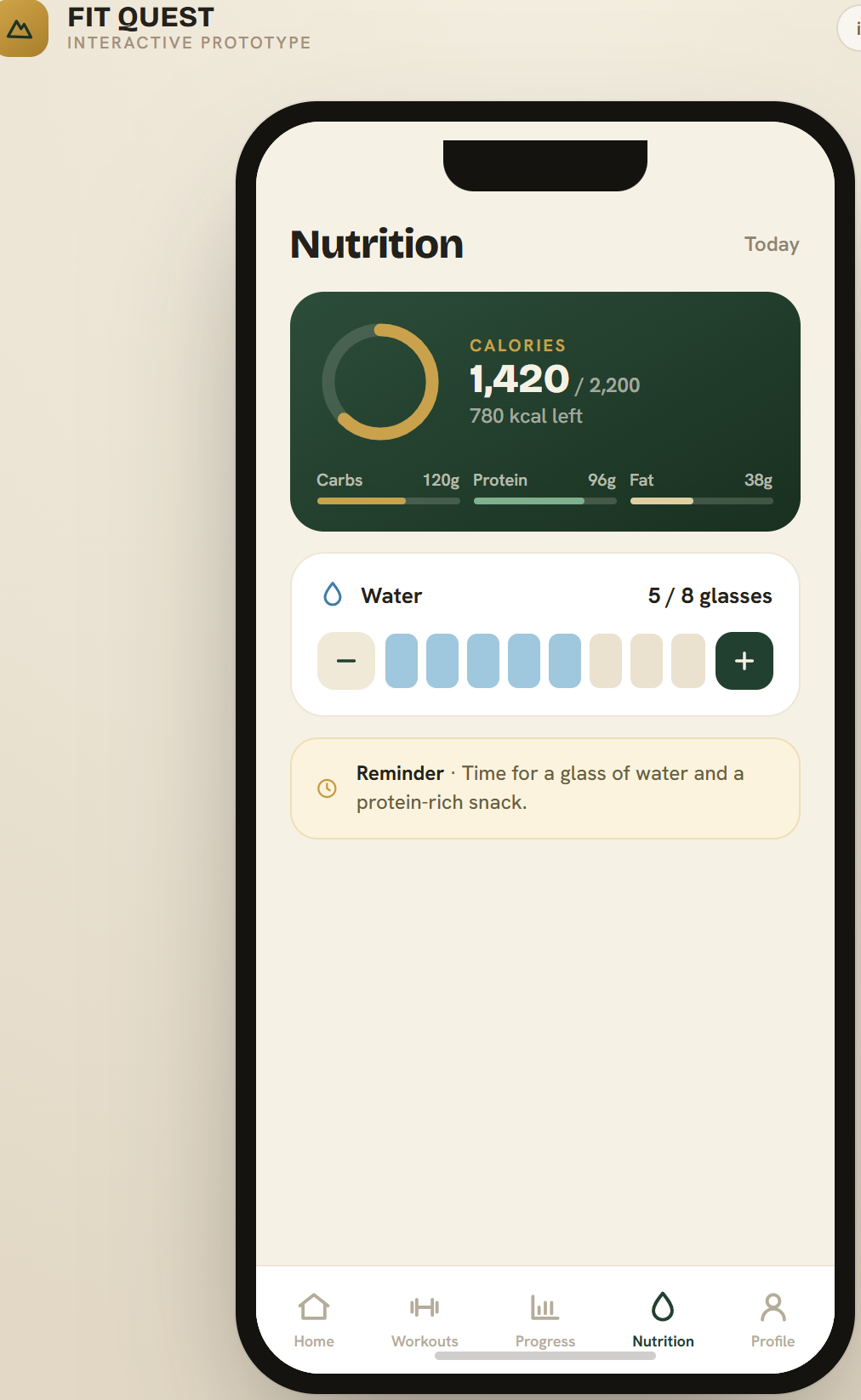
  • Progress & nutrition, simply. Weight, calories and macros are tracked in calm, glanceable screens.
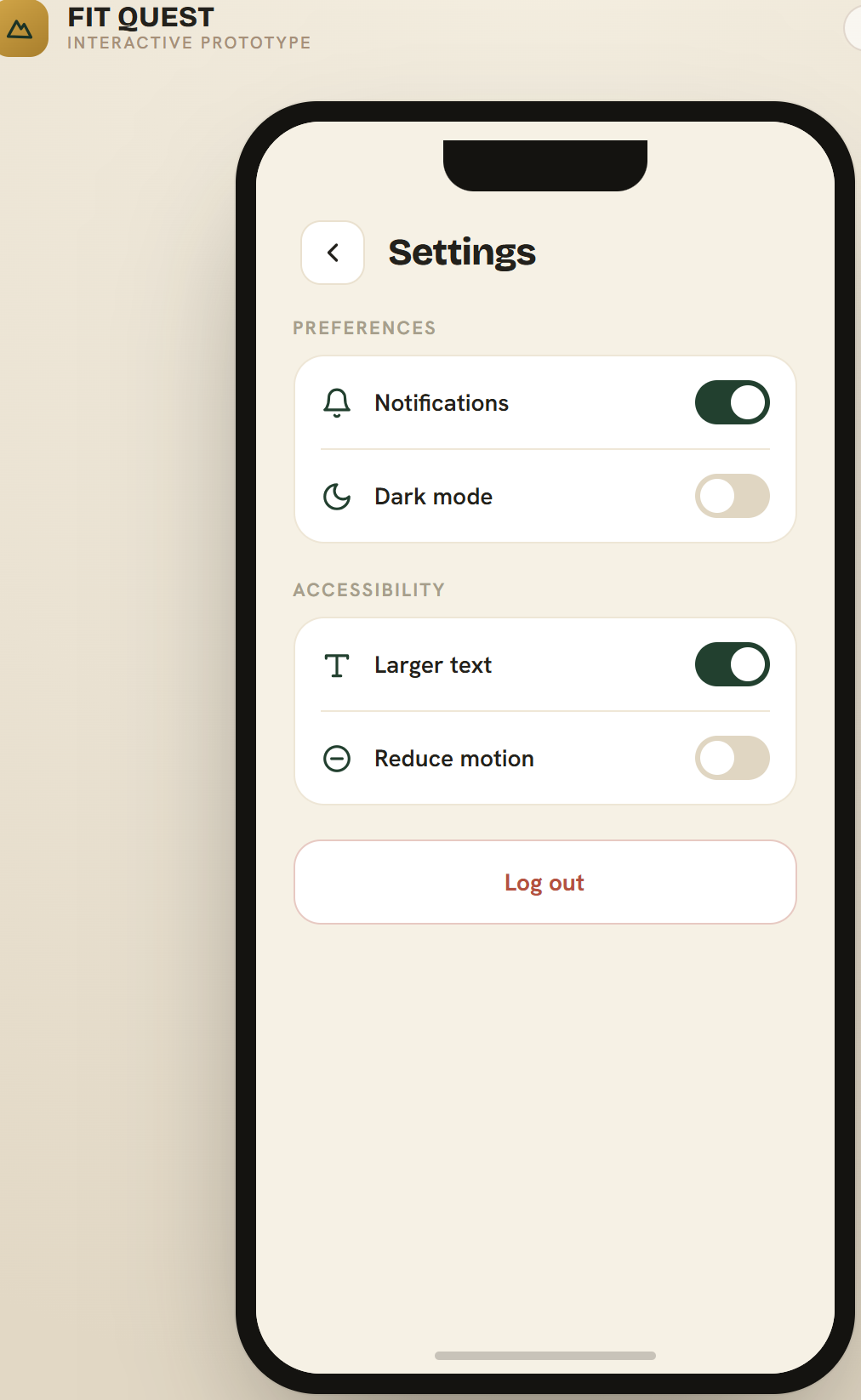
  • Accessible by default. Larger text, reduce-motion and dark mode are first-class settings, not afterthoughts.

Research & users

Who I designed for

I framed lightweight research around one question: why do beginners stop? Drawing on habit and behaviour-design patterns, I mapped where motivation breaks down — and designed personalisation and clarity directly against those moments. AI helped me structure the research, draft proto-personas and organise findings.

T

Tunde, 29

Busy beginner

Wants to get fit but is short on time and easily discouraged. Needs quick wins and a plan that fits his goal.

M

Maryam, 34

Restarting

Has tried apps before and lapsed. Needs the app to feel personal and simple, and not punish a missed day.
User journey

The path that matters most
Choose your main goalBrowse tailored workoutsStart a workoutTrack progress & nutritionBuild the habit

Key screens

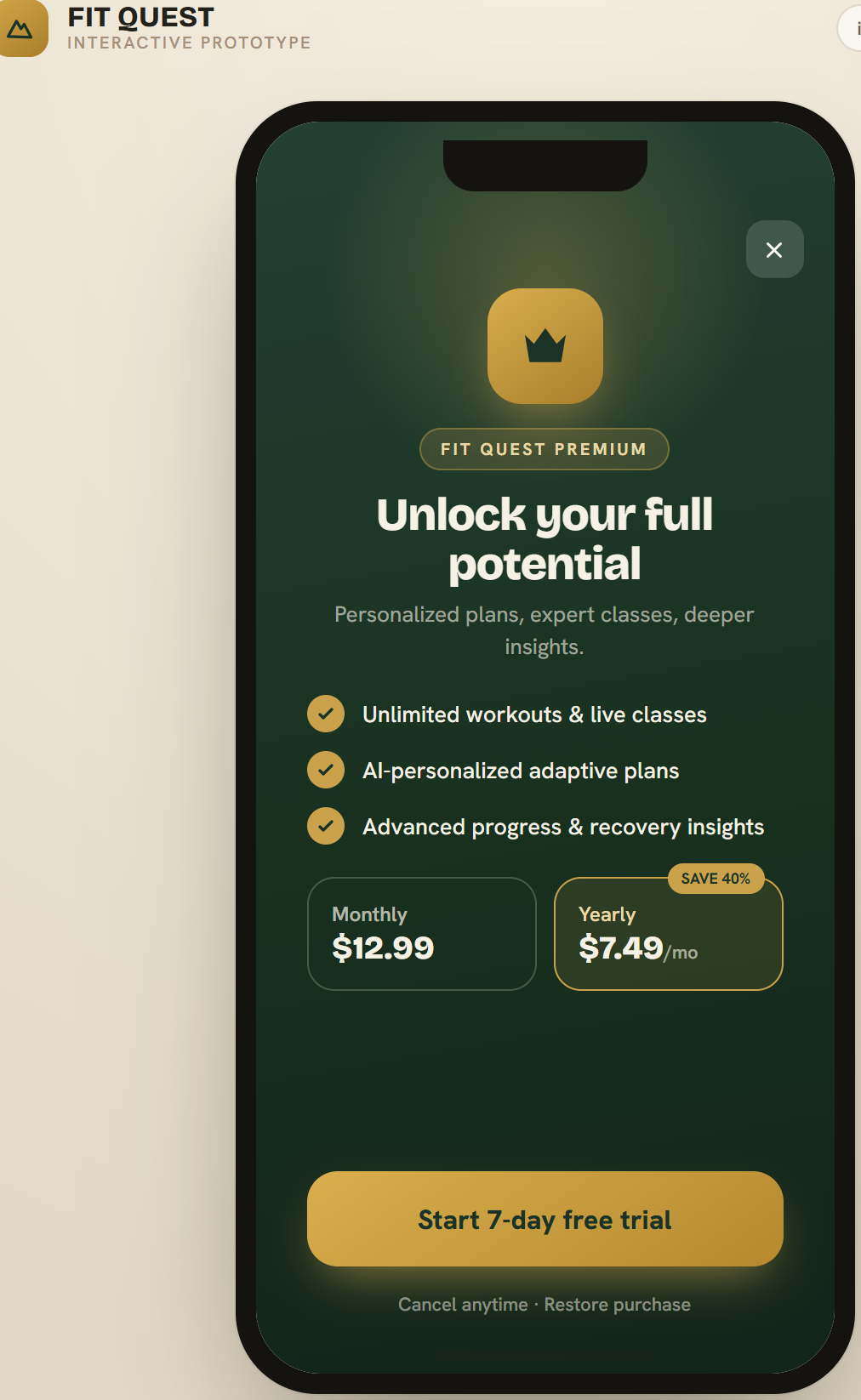
From the interactive prototype

Design decisions

Why it works

Goal-based onboarding

The first screen — ‘What's your main goal?' — personalises everything that follows.

One focused library

Filterable workout cards keep choice clear and the next step obvious.

Progress you can feel

Weight trends, calories and weekly activity turn effort into visible momentum.

Calm, warm palette

Cream, deep green and gold feel encouraging — never clinical or aggressive.

Accessibility

Considered throughout
  • A dedicated Accessibility section with larger-text and reduce-motion options.
  • Dark mode for low-light use and visual comfort.
  • High-contrast cream, green and ink palette checked for legibility.
  • Large touch targets and a simple, consistent bottom navigation.

Outcomes

What I delivered
  • A complete, coherent mobile experience: onboarding, workouts, progress, nutrition, premium and settings.
  • A personalisation model (goal-first) that directly answers the drop-off problem.
  • An interactive prototype demonstrating the full journey.
FIT QUEST
INTERACTIVE PROTOTYPE

Try the interactive prototype

Click through the full experience right here on this site — with device, zoom and fullscreen controls.

Launch interactive prototype →

Challenges & lessons

Reflection

The hardest balance was richness versus calm: fitness apps tend to pile on features. I repeatedly cut back to protect the core loop — set a goal, train, see progress.

“FIT QUEST taught me to design for how people actually feel — and to treat motivation and accessibility as core UX problems, not extras.”

Back to← All workNext projectMethodist Grammar School →